
If a licensed mental health professional put you through conversion therapy in Colorado, a 2026 law lets you sue for the harm it caused. The law removes the filing deadline for these claims. It does not bring back a claim whose old filing deadline had already run by July 1, 2026 (C.R.S. 13-20-1302).
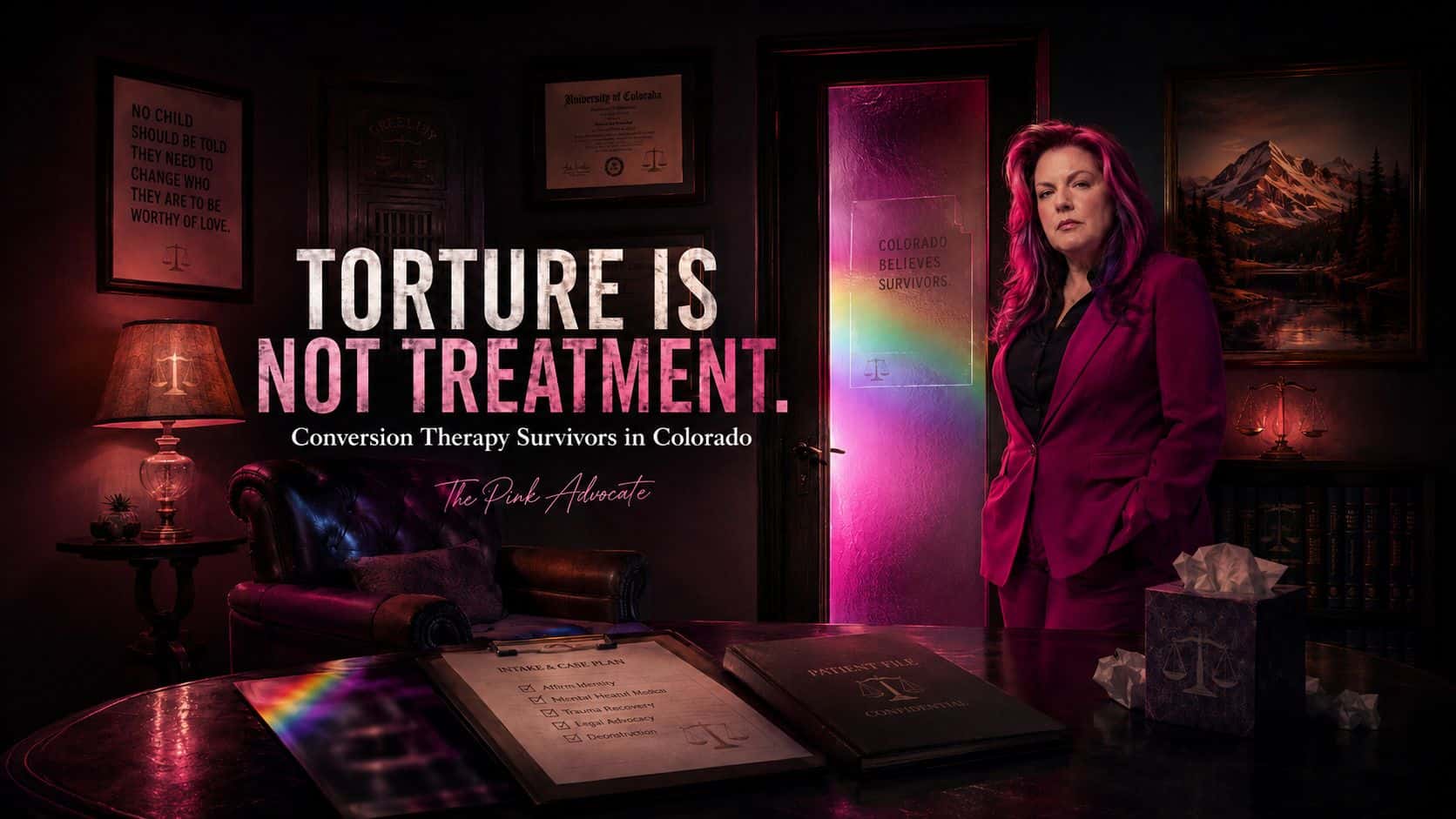
Conversion therapy aims to change a person’s sexual orientation or gender identity. As Marlo Greer notes in her video on this topic, Colorado passed a law in 2026 allowing people harmed by this “therapy” to bring civil claims.
If the person who went through the therapy has died, the claim survives, and the person’s personal representative or estate can bring it. That claim must be filed within five years after the person’s death (C.R.S. 13-20-1302(5)).
Colorado Conversion Therapy Civil Claims
The law allows a person who suffered an injury as a result of “sexual orientation or gender identity change efforts” to bring a civil action for damages against the licensed mental health professional who conducted them. It covers providers who held a Colorado mental health license, certification or registration when the therapy took place. The law also states that it does not create a new cause of action.
In deciding a case, the judge or jury may consider:
- The nature, length and intensity of the change efforts
- Your age and vulnerability at the time
- Your relationship with the mental health professional
- How the timing of the change efforts lines up with when your symptoms started or got worse
- Any other relevant factors
Damages can include economic damages, such as the cost of later mental health treatment, and noneconomic damages, such as pain and suffering. Exemplary damages, also known as punitive damages, are available if the professional’s conduct was willful or wanton (C.R.S. 13-20-1302(3) and 13-21-102).
Other claims against licensed providers usually do have deadlines. For comparison, see Colorado Medical Malpractice Statute of Limitations.
Why the Law Matters for Survivors
Survivors of conversion therapy don’t need Marlo Greer to tell them how hard it can be to live with the consequences. Licensed therapists have no business trying to change something that is innately part of you. On March 31, 2026, in Chiles v. Salazar, the U.S. Supreme Court ruled that Colorado’s conversion therapy ban, as applied to talk therapy, discriminates based on viewpoint and must meet the strictest free speech test. It sent the case back to the lower courts. That case was about the ban. The 2026 civil claims law is a separate statute.
Conversion therapy has been found to be harmful to the mental health of those exposed to it. Sadly, about half of those who went through it were adolescents at the time, according to the Williams Institute at UCLA. These young patients were likely forced to undergo this treatment. Its harmful effects can haunt them for the rest of their lives.
There is a lot of scientific support for the idea that conversion therapy is harmful.
Records to Gather Before You Talk to a Lawyer
It helps to pull together what you already have:
- The name of the provider or practice
- Approximate treatment dates
- Intake forms, consent documents or program materials
- Bills or payment records
- Any other records you already have, such as later counseling records
Talking to a Lawyer About a Conversion Therapy Claim
If you are a survivor of conversion therapy, whether you were forced into it or not, and you were seriously or permanently harmed, Marlo Greer and our team can review the facts with you. We’ll help you understand your options for conversion therapy lawsuits in Colorado. We know how hard it can be to revisit a painful time in your life. We will never pressure you to file a lawsuit; we’ll answer your questions so you can make your own informed decision.
To talk about a conversion therapy claim, call Greer Law Group at 303-331-6460 or contact us online to schedule a free case evaluation.